
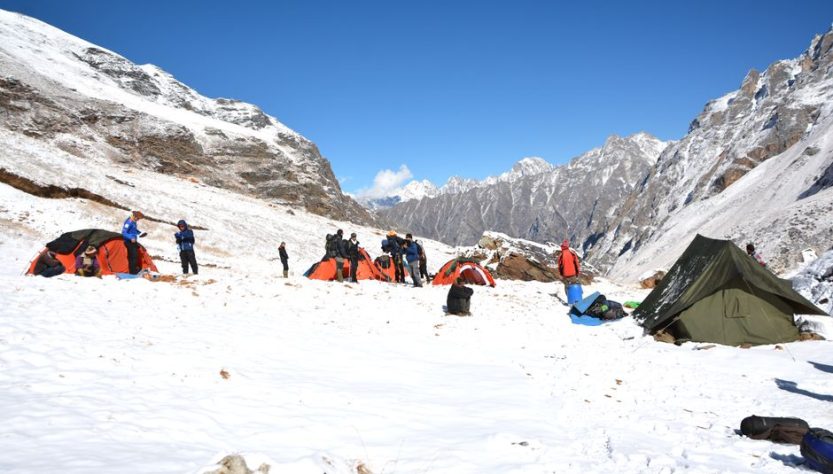
Roughly 30% of trekkers who attempt a Himalayan pass above 4,500 meters turn back early. Not because they are unfit. Because they packed wrong, skipped the permit queue, or ignored a headache that was actually Acute Mountain Sickness (AMS). This guide fixes that. You will learn the exact gear that matters, the real 2026 permit costs, and the safety rules that keep first-timers moving when the trail gets steep.
What “Beginner” Actually Means in the Himalayas
Forget the gym stair climber. A Himalayan multi-day trek is not a long day hike. You are walking 5 to 8 hours daily, sleeping above 3,000 meters, and carrying a pack that weighs 8 to 12 kilograms. The air has 30% less oxygen at 4,000 meters than at sea level. Your body reacts whether you are a marathon runner or a couch potato.
Start with a route that has teahouses, not tents. The Annapurna Base Camp trek (8 to 10 days) and the Everest Base Camp trek (12 to 14 days) are the standard beginner routes in Nepal. Both have beds, hot meals, and no need to carry a tent or stove. In India, the Hampta Pass trek (4 to 5 days) is a solid first Himalayan crossing, but you need a tent and a guide.
Choose Nepal first. The infrastructure is better. You can buy a Snickers bar at 4,100 meters. That matters when your morale drops.
Permits: The Paperwork That Trips People Up
You cannot simply walk into a national park and start trekking. Nepal requires two documents for most teahouse routes: a TIMS card and a park entry permit. India requires different paperwork for each state, usually arranged by your trekking company.
Here is the real 2026 breakdown for the two most popular beginner routes:
| Route | Permit Type | Cost (2026) | Where to Get It |
|---|---|---|---|
| Everest Base Camp | TIMS card + Sagarmatha National Park | $20 + $30 | Kathmandu tourist office or Lukla |
| Annapurna Base Camp | TIMS card + ACAP entry | $20 + $30 | Kathmandu or Pokhara |
| Hampta Pass (India) | Forest permit + camping fee | $15 to $25 | Manali or via trekking agency |
Carry four passport photos and cash. Many permit offices do not take cards. If you book through a local agency in Kathmandu, they handle the paperwork for a $10 to $20 service fee. That is worth it on your first trek. The lines at the Nepal Tourism Board can eat half a day.
Do not book permits online through third-party sites that charge $80 for a $20 TIMS card. That is a common beginner scam. Go to the official office or use a registered local trekking company.
The Gear System: Buy Once, Rent the Rest
You do not need to spend $2,000 before your first trek. You need four items that must be high quality, and everything else can be rented in Kathmandu or Manali for a few dollars a day.
Buy these four items. Do not rent them.
- Boots: The Merrell Moab 3 Mid Waterproof ($145) is the default beginner boot. It has enough ankle support for rocky descents and breaks in quickly. The Salomon X Ultra 4 Mid GTX ($175) is lighter and better for fast hikers. Break them in for two weeks before flying.
- Backpack: The Osprey Kyte 46 (women’s) or Osprey Kestrel 48 (men’s) at $190. A 45 to 50 liter pack is the sweet spot for teahouse treks. You carry clothes, water, and a few snacks. Porters carry the heavy stuff if you hire one.
- Sleeping bag: Teahouses provide blankets, but they smell and are not warm enough above 4,000 meters. The Marmot Trestles Elite Eco 20 ($180) is a synthetic bag rated to -7°C. Down bags like the Rab Ascent 700 ($280) are lighter but useless if wet. Synthetic is safer for beginners.
- Water purification: A Grayl GeoPress ($100) filters and purifies in one press. Or use Aquatabs ($15 for 100 tablets) and wait 30 minutes. Do not buy plastic bottles on the trail. They cost $3 each and create waste that never leaves the mountains.
Rent these in Kathmandu or Pokhara
- Down jacket ($2 to $3 per day)
- Trekking poles ($1 to $2 per day for a pair)
- Duffel bag for porters ($1 per day)
The rental shops in Thamel have good quality gear. Inspect the zippers and seams before you leave. A broken zipper at 4,800 meters is not a fun fix.
Altitude Sickness: The Rule That Saves Lives
Here is the rule: if you have a headache, nausea, or dizziness above 3,000 meters, do not go higher. That is it. Not “wait and see.” Not “take a pill and push through.” You stop, rest, and see if symptoms improve. If they do not, you descend.
AMS kills healthy people every year. It does not care about your fitness. The only cure is going down. Diamox (acetazolamide) helps prevent symptoms, but it is not a license to climb faster. Take 125 mg twice daily starting two days before you go above 3,000 meters if you are prone to altitude issues. Get a prescription before you travel.
The classic beginner mistake is flying to Lukla (2,860 meters) and walking to Namche Bazaar (3,440 meters) on day one. That is a 600-meter gain with no acclimatization. Instead, spend an extra night in Lukla or Phakding. The mountains will still be there tomorrow.
Plan one rest day for every 1,000 meters of elevation gain above 3,000 meters. That is the golden rule. It adds a day or two to your itinerary. It also keeps you alive.
What a Real Daily Budget Looks Like
Forget the $10-a-day backpacker fantasy. On a teahouse trek in Nepal, you will spend $35 to $60 per day. That covers a room, three meals, and hot drinks. Here is the honest breakdown for the Annapurna Base Camp trek:
- Teahouse room: $5 to $10 per night (often free if you eat meals there)
- Breakfast (porridge, eggs, tea): $5 to $8
- Lunch (dal bhat, noodles, soup): $6 to $10
- Dinner (dal bhat, curry, momos): $7 to $12
- Hot shower: $2 to $4
- Charging electronics: $1 to $3 per hour
- Boiled water refill: $1 to $2 per liter
Carry 20,000 to 30,000 Nepalese rupees ($150 to $230) in cash. There are no ATMs above Lukla. The last reliable ATM is in Namche Bazaar, and it sometimes runs out of cash.
If you hire a guide, add $25 to $35 per day. A porter adds $20 to $25 per day. A guide is mandatory in India for most routes. In Nepal, solo trekking is technically allowed on the main routes, but a guide is worth it for a beginner. They know the trails, handle permits, and can recognize AMS symptoms before you do.
Training: The Six-Week Minimum
You do not need to be an athlete. You do need to train. Six weeks before departure, do this:
- Three days per week: hike with a loaded pack (8 to 10 kg) for 2 to 3 hours on hilly terrain
- Two days per week: stair climbs or step-ups for 30 to 45 minutes
- One day per week: long walk or easy hike for 4 to 6 hours
- Rest one day
The goal is not speed. It is time on feet. Your feet, ankles, and lower back need to handle 6 hours of walking with a pack. The stair climber at the gym is fine, but nothing replaces hiking downhill with weight. Downhill destroys knees and toes. Train it.
Skip the heavy leg day at the gym. Squats and deadlifts build strength, but they do not prepare your joints for 8,000 steps of descent. Hiking with a pack is the only training that works.
The Verdict: Start With Annapurna, Not Everest
Every beginner asks about Everest Base Camp. It is the famous one. It is also crowded, expensive, and requires a flight to Lukla that gets canceled when clouds roll in. Annapurna Base Camp is the better first trek. It starts lower, has a more gradual ascent, and costs less to reach. The views of Annapurna I (8,091 meters) and Machapuchare (6,993 meters) are just as dramatic as anything on the Everest route.
Book your permits in Kathmandu, rent your down jacket and poles, buy the four gear items that matter, and train for six weeks. The mountains will handle the rest.