

Most people think the expensive carry-on backpack is the one with the most pockets. That’s backwards. The best carry-on backpack is the one that survives a Ryanair gate agent having a bad day, a monsoon in Bangkok, and being shoved under a bus seat in Peru — without you wanting to throw it in a river. I’ve carried all three of the big names through enough airports to know which ones actually hold up.
Here’s the thing nobody tells you: the difference between a $150 backpack and a $350 backpack isn’t comfort. It’s failure points. Zippers. Strap stitching. Frame sheets. The stuff that breaks at 4am in a hostel when you’re trying to catch a 6am flight. So let’s talk about what actually matters.
The Real Problem: Why Most Carry-On Backpacks Fail International Travel
International carry-on isn’t the same as domestic US carry-on. European budget airlines like Ryanair and easyJet have smaller sizers. Asian airlines weigh your bag. Some Middle Eastern carriers have weird restrictions on backpack frames. Your bag needs to fit in a 55x40x20cm sizer one day and survive being gate-checked the next.
I’ve watched people get charged €75 at the gate because their “carry-on” backpack was 3cm too tall. The Osprey Farpoint 40 and Tortuga Travel Backpack Pro 40L both measure right around 55x35x23cm — which is technically over the Ryanair sizer but usually squeezes in if you don’t overpack. The Nomatic Travel Bag 40L is 53x36x23cm, which is closer but still tight.
The failure mode most people hit: they buy a 45L backpack thinking bigger is better, then discover it won’t fit any European budget airline sizer. Then they’re checking a $300 backpack and watching it get thrown onto a conveyor belt. Don’t do that.
What Actually Breaks First
Zippers are the #1 failure point on travel backpacks. The Nomatic Travel Bag uses YKK zippers, which are the industry standard. The Osprey Farpoint 40 also uses YKK. The Tortuga Travel Backpack Pro 40L uses YKK too — but the zipper pulls on the Tortuga are smaller and harder to grab with cold hands. Minor thing, but when you’re at a train station in Munich at 5am in January, you notice.
Second failure point: the hip belt. If you’re carrying 8-10kg for 14 hours through airports and train stations, a flimsy hip belt will destroy your shoulders. The Osprey Farpoint 40 has the best hip belt of the three — it’s padded, it’s substantial, and it actually transfers weight. The Nomatic’s hip belt is a thin strap that feels like an afterthought. The Tortuga’s is decent but not as good as the Osprey’s.
Third failure point: the laptop sleeve placement. If it’s against your back, it’s protected but hard to access. If it’s in the front, it’s easy to access but vulnerable if the bag gets dropped. The Osprey puts the laptop sleeve against your back. The Nomatic puts it in the front admin panel. The Tortuga puts it against your back too. For security, back-placement wins. For airport security lines, front-placement is faster.
Osprey Farpoint 40: The Workhorse That Won’t Die

The Osprey Farpoint 40 has been around for over a decade, and there’s a reason it’s still the backpack I recommend to most people. It’s not the flashiest. It’s not the most organized. But it’s the one that survives.
The current version (2026 model) costs around $185 and weighs 1.59kg empty. That’s lighter than both the Nomatic Travel Bag 40L (1.8kg) and the Tortuga Travel Backpack Pro 40L (1.9kg). When you’re trying to stay under a 7kg weight limit on AirAsia, that 200-300g difference matters.
What I like about the Farpoint: the suspension system is real. It has a proper internal frame, load lifters, and a hip belt that actually does something. You can carry this thing for hours and your back won’t hurt. The main compartment opens like a suitcase, which makes packing and unpacking easy. The compression straps actually compress.
What I don’t like: it’s ugly. It looks like a hiking backpack, not a travel backpack. The organization is minimal — you get one main compartment, a laptop sleeve, and a small front pocket. If you want 14 different pockets for cables and chargers, this isn’t your bag. And the water bottle pockets are a joke — they’re too shallow to hold anything bigger than a 500ml bottle.
Verdict: If you’re going to be carrying your bag for long distances and you don’t care about looking stylish, get the Osprey Farpoint 40. It’s the one I’d take on a 6-month trip through Southeast Asia.
Nomatic Travel Bag 40L: The Over-Engineered Office on Your Back
The Nomatic Travel Bag 40L is the bag people buy when they want to look like they have their life together. It’s sleek, it’s black, it has a million pockets, and it costs $289. It’s also the bag I’ve seen fail the most in real-world travel.
Here’s the problem: the Nomatic is designed by people who think travel is organized. It’s not. Travel is chaotic. You need to grab your passport while running to a gate. You need to stuff a jacket into your bag while standing in line. You need to access your laptop while sitting on a train. The Nomatic’s organization is beautiful in theory and frustrating in practice.
The shoe compartment is a nice idea, but it eats into the main compartment space. The tech organization panel is great if you carry 12 different cables, but if you’re a normal person with a phone charger and a power bank, it’s wasted space. The bag expands from 30L to 40L, which sounds useful, but the expanded version looks like a turtle shell and doesn’t fit in most airline sizers.
That said, the Nomatic has the best laptop access of the three. The front admin panel opens flat, and you can pull your laptop out in seconds. The materials feel premium — the water-resistant coating actually works in light rain. And the bag stands up on its own, which is a small thing that makes a big difference when you’re in a cramped hostel.
Verdict: If you’re a digital nomad who works from coffee shops and needs organized tech access, the Nomatic Travel Bag 40L is worth considering. If you’re a backpacker who needs to carry clothes and survive budget airlines, skip it.
Tortuga Travel Backpack Pro 40L: The Compromise That Works
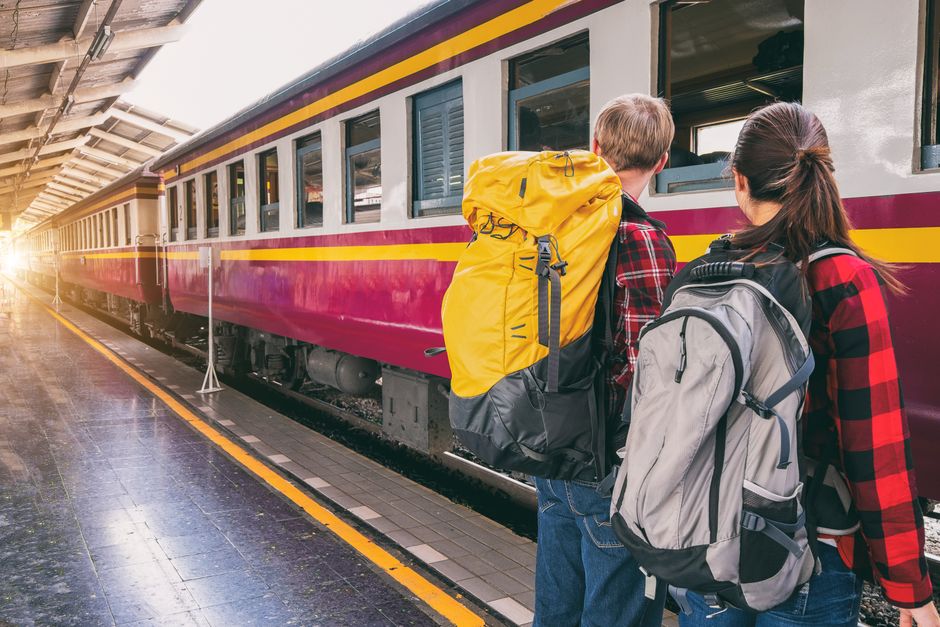
The Tortuga Travel Backpack Pro 40L ($299) is the bag I recommend when someone wants the organization of the Nomatic but the carrying comfort of the Osprey. It’s not perfect at either, but it’s good at both.
The Tortuga has the best organization of the three without going overboard. The front admin panel has enough pockets for the essentials without turning into a filing cabinet. The main compartment opens like a suitcase, same as the Osprey. The laptop sleeve is padded and fits a 16-inch laptop. The water bottle pocket actually holds a 1L Nalgene, which is rare in this category.
What I don’t like: the Tortuga is heavy. At 1.9kg empty, it’s the heaviest of the three. When you’re trying to stay under a 7kg airline weight limit, that extra weight matters. The hip belt is decent but not as good as the Osprey’s. And the bag is expensive — $299 is a lot of money for a backpack.
The Tortuga’s biggest advantage is the fit. It comes in two torso sizes, which is rare for travel backpacks. If you’re tall or short, you’ll appreciate this. The Osprey Farpoint 40 comes in one size, and it doesn’t fit everyone well.
Verdict: If you want a balance of organization and comfort and you’re willing to pay for it, the Tortuga Travel Backpack Pro 40L is the best all-around choice. It’s the bag I’d take on a 2-week trip to Europe where I need to look presentable but also need to carry everything on my back.
Head-to-Head Specs: The Numbers That Matter
| Feature | Osprey Farpoint 40 | Nomatic Travel Bag 40L | Tortuga Travel Backpack Pro 40L |
|---|---|---|---|
| Price (2026) | $185 | $289 | $299 |
| Weight (empty) | 1.59kg | 1.8kg | 1.9kg |
| Dimensions (cm) | 55x35x23 | 53x36x23 | 55x35x23 |
| Laptop Sleeve | 16-inch, back panel | 16-inch, front panel | 16-inch, back panel |
| Hip Belt | Padded, substantial | Thin strap | Padded, decent |
| Water Bottle Pocket | Shallow, useless | None (external) | Fits 1L Nalgene |
| Frame Sheet | Yes, full internal frame | No, soft back panel | Yes, semi-rigid |
| Best For | Long-term backpacking | Digital nomads | Short trips, organization |
Look at the weight column. The Osprey is 310g lighter than the Tortuga. That’s the weight of a paperback book or a pair of sandals. When you’re trying to stay under 7kg, that matters. The Nomatic’s lack of a frame sheet means it collapses when empty, which makes it packable but also means it doesn’t carry weight well when full.
When NOT to Buy Any of These

Here’s the uncomfortable truth: most people don’t need a $200+ carry-on backpack. If you’re taking one trip a year, a $60 Amazon Basics backpack will work fine. You don’t need load lifters and a frame sheet for a 4-hour flight.
You also don’t need a 40L backpack if you’re a light packer. A 28-30L backpack like the Osprey Daylite 26+6 ($110) or the Cotopaxi Allpa 28L ($180) is easier to carry, fits every airline sizer, and forces you to pack less. I’ve done 3-week trips with a 28L bag, and it’s liberating.
Don’t buy the Nomatic if you’re not a digital nomad. The organization is wasted on someone who just needs to pack clothes and go. You’re paying $289 for pockets you won’t use.
Don’t buy the Tortuga if you’re on a budget. The $299 price tag is hard to justify when the Osprey does 90% of the same job for $185. The extra $114 buys you better organization and a better water bottle pocket. That’s it.
Don’t buy the Osprey if you need quick laptop access. The laptop sleeve is against your back, which means you have to open the main compartment to get to it. If you’re going through airport security every week, this gets old fast.
My Pick for 2026: What I’d Actually Buy
If I had to buy one of these three right now for international travel in 2026, I’d buy the Osprey Farpoint 40. Here’s why: it’s the cheapest, it’s the lightest, it has the best carrying comfort, and it’s the most durable. The things it’s bad at — organization and quick laptop access — are things I can work around. The things it’s good at — comfort and durability — are things I can’t work around.
But here’s the caveat: I’d buy the Osprey Farpoint 40 only if I was planning to carry it for long distances. If I was mostly taking taxis and staying in hotels, I’d buy the Tortuga Travel Backpack Pro 40L for the organization. And if I was a digital nomad working from coffee shops, I’d buy the Nomatic Travel Bag 40L for the laptop access.
The real answer is that the best carry-on backpack is the one that matches how you actually travel, not how you imagine you’ll travel. Most people imagine themselves as digital nomads and buy the Nomatic. Then they end up backpacking through Vietnam and wishing they’d bought the Osprey.
I started this article talking about failure points — zippers, straps, frame sheets. The biggest failure point isn’t any of those. It’s buying the wrong bag for your travel style. Figure out how you actually travel first. Then buy the bag.