
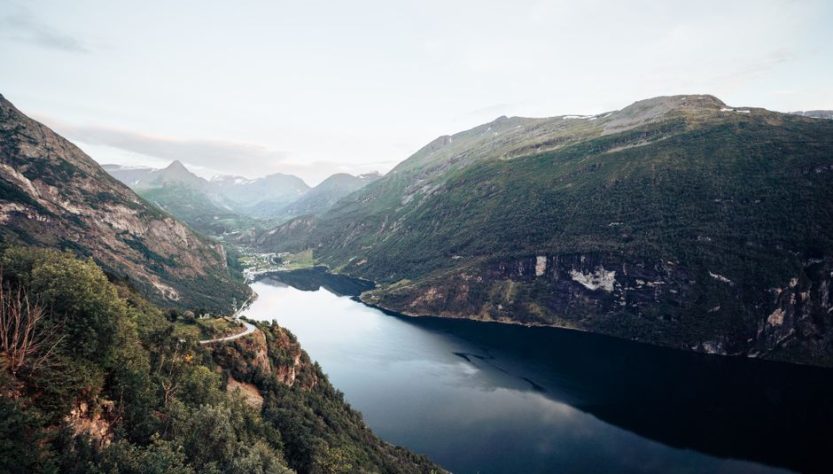
Can you see Norway’s biggest waterfalls in May without finding every hiking trail buried under snow? Yes, but the best trip uses low valley routes, flexible transport, and a careful check of mountain conditions. May rewards travelers who want rushing water and quieter viewpoints, but it punishes anyone who treats spring like midsummer.
Is May the best month for Norwegian fjords?
For waterfalls, May is one of the strongest months. Snow stored on the mountains begins to melt, feeding streams and sending fresh water over the cliffs. The effect is most striking in western Norway, where green valleys sit below snowy peaks. Visit Norway’s spring guidance also warns that conditions can change quickly during March, April, and May.
The May trade-off
The same snowmelt that creates huge waterfalls can block high trails, delay roads, and leave shaded paths slick. The answer is not to avoid May. It is to match the route to the week and the altitude.
| Travel window | Best feature | Main limitation | Best choice |
|---|---|---|---|
| May 1–10 | Strong snowmelt and very light visitor levels | Snow and ice remain common above the valleys | Waterfalls, fjord cruises, and low forest walks |
| May 11–17 | Longer days and more open local services | May 17 can bring busy roads and limited bookings | Book transport early and avoid the national holiday for quiet trails |
| May 18–31 | More trails and roads usually open | Rain, mud, and lingering snow still affect high routes | Combine one ambitious hike with two flexible valley days |
| Southern and western fjords | Earlier spring, blossoms, and reliable low-level scenery | Coastal rain can arrive quickly | Hardangerfjord, Sognefjord, and Lysefjord |
| Northern fjords | Very long daylight and dramatic late snow | Spring may arrive weeks later | Choose northern Norway for light, not dependable early hiking |
My verdict: May is the best month for travelers who rank waterfall power and quiet trails above guaranteed high-mountain access. June is the safer choice for a hiking-first trip. In May, build your plan around scenery that works from the fjord, the valley, or a boat deck even when a summit route stays closed.
Which fjords have the best May waterfalls?
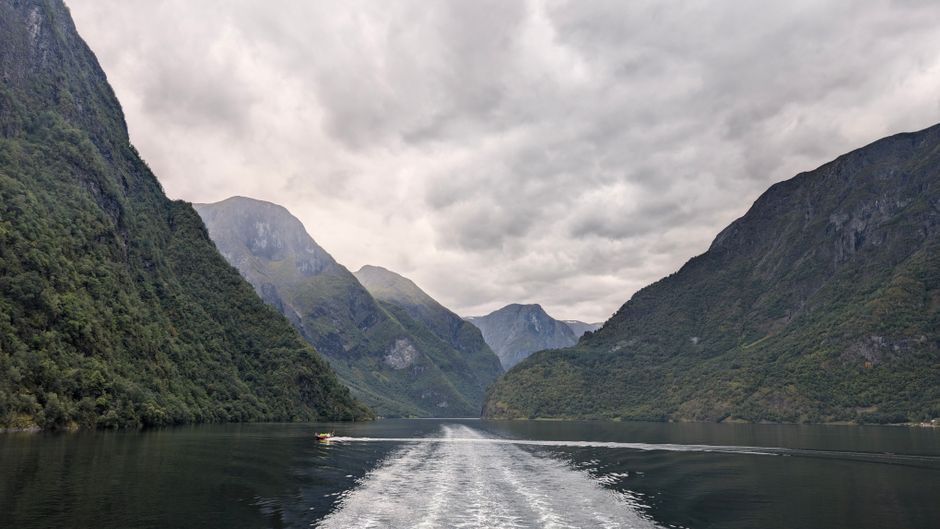
Hardangerfjord is the strongest all-round choice for a May waterfall trip. It combines accessible valleys, fruit orchards, glacier-fed rivers, and several major waterfalls within a manageable area. Sognefjord offers the widest range of landscapes, from the narrow Nærøyfjord to high valleys around Flåm and Årdal. Lysefjord is excellent for dramatic viewpoints, but its famous high hikes need more caution early in the month.
Hardangerfjord: the best waterfall base
Start with Kinsarvik and the Husedalen valley. Four waterfalls sit along the route toward the Hardangervidda plateau. The official trail listing gives the route a length of up to 5 kilometres one way, around 700 metres of ascent, and a walking time of 3–6 hours depending on how many waterfalls you visit. It is listed for May to October, but the trail can be steep, wet, and slippery. Visit the Husedalen route details before setting out.
Husedalen is my pick for the biggest payoff on a moderate trip, but do not treat it as a flat waterfall stroll. Stop at the first or second fall if rain has made the upper trail unsafe. That still gives you powerful water, forest, and mountain views without turning one hike into a full-day problem.
Sognefjord: the best scenery-to-effort ratio
Choose the Nærøyfjord and Aurlandsfjord area if you want a boat journey to do most of the sightseeing. The Nærøyfjord is about 18 kilometres long and narrows to roughly 250 metres in places, with steep mountains and waterfalls dropping toward the water. A cruise gives you the main drama without relying on a high trail. Add a low valley walk around Flåm or Aurland when the weather clears.
Lysefjord and Geirangerfjord: spectacular, but more conditional
Preikestolen can work in May when the trail is clear, but wet rock and crowded weekends still affect the experience. Kjerag is a later-May option rather than an automatic early-May plan. The access road usually opens around mid-May, and the hike is about 11 kilometres round trip with roughly 760 metres of ascent. Geirangerfjord brings famous waterfalls and seasonal cruises, yet transport connections are more limited early in the season. Pick it for a scenic cruise, not for a packed list of high trails.
How do you choose a safe May hiking trail?
The best May hike is not the most famous one. It is the route that stays enjoyable after rain, snow, and a late ferry. Use this process each morning.
- Start with altitude. For early May, favor valley paths, shore walks, and routes below about 500 metres. Snow can remain much higher even when the fjord village feels mild.
- Check three conditions. Read the mountain forecast, road status, and local trail information. A blue sky in Bergen does not prove that a trail above Eidfjord or Lysebotn is safe.
- Set a turnaround point before leaving. Turn around when the trail becomes icy, the markings disappear, or the ground turns into deep mud. A waterfall viewed from halfway is better than a late descent in darkness.
- Carry real wet-weather gear. Use waterproof footwear with firm grip, a waterproof shell, warm layers, food, water, a charged phone, and a headlamp. Trekking poles help on muddy descents, but they do not make exposed snow safe.
- Keep one low-level backup. A fjord cruise, village walk, museum, orchard road, or scenic train protects the day when a mountain route closes. May trips need options, not more ambition.
The mistake that ruins May hikes
Travelers often copy a summer itinerary and move every hike six weeks earlier. That fails because trail access depends on snow depth, drainage, road opening, and recent rain. The Vøringsfossen canyon route, for example, includes rough boulders and slippery ground and should not be attempted in snow or icy conditions. Sturdy boots are required, and the route is physically demanding even after access improves.
Choose the route after checking conditions, not before. This simple change makes a May trip safer and usually more relaxed.
What should you book, and what should you skip?
My recommendation is a two-base trip: Bergen plus one fjord village. Stay three nights in Bergen, then spend three or four nights near Kinsarvik, Flåm, Aurland, or another small fjord settlement. This gives you enough time to move a hike when rain arrives. A one-night dash through several fjords looks efficient on a map, but it leaves no room for a cancelled ferry or a closed trail.
Best transport shortcut for first-time visitors
Fjord Tours’ Norway in a Nutshell is the easiest packaged option for a scenery-focused day. It combines the Bergen Railway, Flåm Railway, bus travel, and a fjord cruise through the Nærøyfjord and Aurlandsfjord area. The current route is available year-round, while the company lists its Preikestolen combination for May to September from NOK 7,100. Choose the package when you want transport handled. Skip it when your main goal is quiet hiking, since fixed connections limit your time on the trail.
Best guided option and the service to avoid
For solo travelers or anyone uneasy about spring mountain conditions, Norway Mountain Guides’ fjord hiking service is a sensible choice. Its published details describe 5–9 kilometres, 3–5 hours of hiking, and about 300–400 metres of ascent, with 2026 availability from May 1 and prices from NOK 1,897. The guide chooses the destination around the forecast, which is exactly what May requires.
Skip a rigid cruise-only itinerary if waterfalls and trails are your priority. Hurtigruten offers a coastal voyage rather than a flexible hiking base, while the Flåm Railway works best as one scenic transport leg inside a wider plan. Book the service that solves your real problem: uncertainty, not a lack of places to see.
Is May right for your Norwegian fjord trip?
Will I see waterfalls without taking a hard hike?
Yes. Boat routes through the Nærøyfjord, Geirangerfjord, and Aurlandsfjord bring you close to major cascades from a stable viewpoint. Roads and village paths also reach waterfalls such as Steinsdalsfossen and Langfoss with far less effort than a high summit. May is especially good for this style of travel because the water is loud and full while the viewpoints remain less crowded than in July.
Should I choose May or June?
Choose May for stronger snowmelt, spring blossoms, lower visitor numbers, and a quieter feel. Choose June if you want the widest choice of open high trails, more predictable road access, and a better chance of completing famous hikes such as Kjerag. May wins for a mixed itinerary built around waterfalls and villages. June wins for a trip built around long mountain days.
What is the safest final plan?
Spend the first day on a fjord cruise or scenic train, place your hardest hike in the middle of the stay, and keep the final day flexible. Check local conditions each morning. Stay below the snow line when the forecast turns wet. That plan gives you the quiet trails and peak waterfalls you came for without pretending that May has already become summer.
So when you wake to rain on the fjord and see fresh snow above the valley, the trip is not ruined. Take the boat, watch the waterfalls surge, and save the trail for the first clear morning. In the Norwegian fjords in May, that flexibility is what turns spring’s uncertainty into the best part of the journey.