
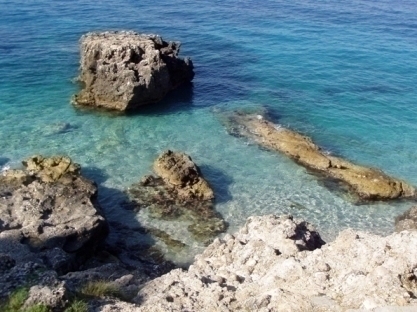
Albania scores a 30.5 on Numbeo’s 2026 Crime Index — lower than France (47.4), Italy (44.1), and Spain (38.2). That single data point overturns the assumption most Western travelers bring into their research. Yet the logistics of actually visiting Albania stay genuinely tricky in ways crime statistics don’t capture: ATM coverage outside major cities is patchy, road conditions in the northern highlands can be severe, and the informal cash economy catches card-dependent travelers off guard with surprising regularity.
What follows is a structured breakdown of the variables that matter most — entry rules, costs, transport, safety, and cultural context — drawn from cross-referencing Albanian government entry requirements, WHO transport data, Numbeo indices, and traveler field reports from 2026-2026.
Visa Rules and Border Access: Who Gets In and For How Long
Albania is not in the EU and not in the Schengen Area. That distinction reshapes the math for several passport holders in ways that aren’t immediately obvious from a quick search.
EU, US, UK, Canadian, and Australian citizens can enter visa-free for stays of up to one full year — not 90 days, not 180 days. Albania extended its visa-free window to attract longer-term visitors and slow travelers. The entry stamp allows continuous stays without needing to exit and re-enter.
Critical exclusion: this extended stay does NOT count as Schengen time. If you’re managing the 90/180 Schengen rule across Europe, your days inside Albania don’t count toward — or reset — your allowance for Greece, Italy, Croatia, or any other Schengen member state. Travelers who spend three months in Albania and then attempt to enter Greece still face the same 90-day allowance they had before crossing into Albania. That misunderstanding catches slow travelers badly every summer.
Visa Requirements by Passport (2026)
| Passport | Visa Required? | Max Stay | Key Notes |
|---|---|---|---|
| EU (all member states) | No | Up to 1 year | No registration required for stays under 90 days |
| USA | No | Up to 1 year | Passport valid for 3 months beyond intended stay |
| UK | No | Up to 1 year | Post-Brexit rules unchanged specifically for Albania |
| Canada / Australia / NZ | No | Up to 1 year | Same entry conditions as US passport holders |
| India | Yes | Per visa terms | Apply via Albanian embassy; processing typically 10-15 business days |
| China | Conditional | Per visa terms | Holders of valid Schengen or US visa may qualify for exemption |
Land Border Crossings: Practical Details
Albania shares borders with Greece, North Macedonia, Kosovo, and Montenegro. Most crossings operate 24/7, but overnight staffing is thin. The Kakavija crossing from Greece is the busiest and most reliable for road entry from the south. The Morina crossing on the Kosovo border handles heavy truck traffic — expect delays of 60-90 minutes on weekends during summer. Hani i Hotit into Montenegro runs noticeably faster.
One consistent traveler report: Albanian border officers occasionally reject EU national ID cards even when technically valid under bilateral agreements. Carry your passport to every crossing. This is not official policy but happens often enough to be a real planning risk.
What Albania Actually Costs: A Data-Driven Budget Breakdown
Albania remains the cheapest destination in mainland Europe for independent travelers — but the gap between budget and mid-range travel has closed sharply along the Riviera since 2026. Coastal towns like Ksamil and Himara now price comparably to southern Croatia or Montenegro during peak July and August. The interior, the north, and the UNESCO heritage towns of Berat and Gjirokastra stay dramatically cheaper year-round.
Currency note: the Albanian lek (ALL) trades at roughly 100 ALL to 1 EUR in 2026. Most guesthouses and tour operators quote in EUR for convenience. Local markets, furgon drivers, and small cafes only accept ALL in cash. You cannot buy or exchange ALL outside Albania — arrive with EUR and exchange at a Raiffeisen Bank branch, BKT (Banka Kombëtare Tregtare), or a licensed exchange office in Tirana. Airport exchange counters offer rates 3-5% worse than in-city rates.
Daily Budget Tiers by Travel Style
| Tier | Accommodation | Food | Transport | Daily Total (EUR) |
|---|---|---|---|---|
| Budget backpacker | Hostel dorm ~10-15 EUR | Byrek + bufe meals ~5-7 EUR | Furgon ~3-5 EUR | 25-35 EUR |
| Independent mid-range | Guesthouse 40-60 EUR | Restaurant meals ~15-20 EUR | Car rental 30-40 EUR | 85-125 EUR |
| Comfort traveler | 4-star hotel 90-140 EUR | Full meals with wine ~35 EUR | Private transfers ~50 EUR | 185-230 EUR |
Where the Budget Estimate Breaks Down
The Marriott Tirana runs 115-135 EUR per night in 2026. The Rogner Hotel Tirana charges 110-150 EUR. Search for Albanian hotels and filter by star rating and you’ll land on these two, forming a skewed baseline. They are outliers. Most guesthouses in Berat or Gjirokastra charge 30-50 EUR for a double with breakfast included.
Restaurants in Tirana’s Blloku district price at near-Western-European levels. A pasta dish at Era Restaurant in Blloku runs 1,200-1,600 ALL (12-16 EUR). The same meal at a family-run bufe near the Old Bazaar costs 400-500 ALL (4-5 EUR). Same city, three times the price difference, an 8-minute walk apart. Travelers who build their cost expectations from Blloku will consistently overestimate what Albania costs.
The ATM and Cash Problem
Outside Tirana, Durrës, and Shkodra, card acceptance drops sharply. In the Accursed Mountains — the Valbona and Theth valleys — cash is the only option for accommodation, food, and transport. BKT and Raiffeisen Bank run the most reliable ATM networks for international Visa and Mastercard. Credins Bank ATMs report the highest international card rejection rate among traveler accounts. Withdraw enough cash before leaving any major city. The working rule: carry at least three days of cash reserves whenever heading north or into mountain terrain.
Getting Around Albania: The Transport Reality Nobody Warns You About
Albania has no functional passenger rail for tourism. The single operating route — Tirana to Durrës, roughly 38 km — takes over an hour and runs infrequently. Every journey of interest happens by road. Here is how the options compare, ranked by practical reliability:
- Furgons (shared minivans) — the backbone of Albanian inter-city travel. They depart when full, not on a fixed timetable. Cost: 1-5 EUR for most routes. In Tirana, northern-route furgons depart from near Rruga Dritan Hoxha. Southern routes leave from the main bus terminal near the Train Station. No online booking system exists — show up, find your destination’s van, and wait.
- Besa Touring and Albtransport — the two main coach operators with published schedules. Besa Touring covers Tirana–Shkodra, Tirana–Saranda, and several cross-border routes to Kosovo and North Macedonia. Tickets are sold at the terminal window; no reliable online booking operates as of 2026.
- Car rental — genuinely transforms what’s accessible, especially in the north. Europcar and Sixt both operate at Tirana International Airport (TIA). Budget 30-45 EUR per day for a compact. Critical exclusion in most rental contracts: driving an Albanian-registered rental car into Kosovo is prohibited. Verify this before crossing. For SH20 — the northern mountain route through the Accursed Mountains — request a crossover or light SUV. Standard compacts handle poorly on unpaved sections and sometimes can’t manage the route after heavy rain.
- Bolt — operates reliably within Tirana. Standard cross-city fare: 300-500 ALL (3-5 EUR). Outside Tirana, rideshare apps don’t cover other cities. Negotiate a fare before entering any unmarked taxi; agree on a specific number before the door closes.
- FlixBus and regional operators — FlixBus now covers Tirana–Pristina and Tirana–Skopje with comfortable coaches on fixed schedules, bookable online. Tirana–Athens takes approximately 7-8 hours via the Kakavija crossing; multiple operators run this daily for 15-25 EUR. Book at least 48 hours ahead in July and August.
The most common transport mistake: assuming you can reach the Accursed Mountains by public transport without planning ahead. Valbona and Theth connect via the well-known Peaks of the Balkans hiking trail, but reaching either trailhead without a car means a furgon to Shkodra followed by a negotiated private vehicle transfer for the last 40-50 km of mountain road. That private transfer costs 40-70 EUR each way. Factor it into the itinerary budget before committing to the route.
Albania’s Safety Profile: The Honest Assessment
Numbeo’s 2026 data puts Albania’s overall crime index at 30.5 — comparable to Iceland (28.3) and below Portugal (42.1), Germany (37.1), and France (47.4). Petty theft targeting tourists exists in Tirana’s nightlife district at levels below most Western European capitals. The northern highlands, despite their historical association with blood feud customs under the Kanun legal code, are consistently rated among the most hospitable areas in the Balkans for foreign visitors.
The actual risk profile differs from what most travelers anticipate. Road safety is the dominant concern, not crime. Albania’s road fatality rate (8.7 per 100,000 population, WHO 2026 data) sits among the highest in Europe. Aggressive overtaking on single-lane mountain roads, livestock crossing highways at night, and poorly marked hazards create real danger. Avoid rural driving after dark. Don’t assume the fastest route on Google Maps is physically passable in a standard vehicle without checking road condition reports first.
Solo female travelers consistently report Albania as safer than expected — safer, in documented accounts, than many popular Western European cities. The Albanian cultural concept of besa — a code of honor linking hospitality to personal and family reputation — creates a social dynamic that multiple independent travel writers have described as tangibly protective in practice.
Cultural Norms That Affect Daily Travel
How Religious Is Albania, and Does It Change How You Travel?
Albania is roughly 57% Muslim by census data, but religious practice is historically moderate and visibly secular. Alcohol is sold everywhere. The communist government under Enver Hoxha banned all religious practice from 1967 to 1990 — that 23-year suppression shaped a secular culture that holds across generations. You won’t encounter dress codes in daily life. Dress modestly when entering the Et’hem Bey Mosque in Tirana or the Orthodox churches in Berat and Gjirokastra, but that standard applies to most religious sites across Europe regardless of faith. Outside those spaces, dress as you would anywhere in southern Europe.
Will English Get You Through?
In Tirana: yes, widely, especially among anyone under 35. Albanian state TV has historically broadcast foreign programs unsubtitled, which accelerated English adoption faster than neighboring countries with dubbing traditions. In Shkodra, Saranda, Berat, and Gjirokastra: enough English to handle all standard tourist situations. In small mountain villages and the rural south: minimal. Italian works better than English in the southwest, given Albania’s geographic proximity and its large diaspora community in Italy.
Learning three Albanian phrases earns disproportionate goodwill everywhere: faleminderit (thank you), ju lutem (please), and sa kushton? (how much?). Locals respond visibly differently to travelers who attempt even basic Albanian.
The Head Gesture That Confuses Every First-Time Visitor
Albanian head language is inverted from most European conventions. A single nod upward and back means no. A side-to-side head shake means yes. This trips up every first-time visitor at least once, usually during a transaction or when asking for directions. Younger Albanians in cities have mostly adopted the standard European system, but in rural areas and among older residents the traditional gestures hold. When unsure, ask for verbal confirmation — any ambiguity is worth a quick po apo jo? (yes or no?).
Quick Reference: Albania Trip Planning Variables
| Variable | What to Expect | Key Action |
|---|---|---|
| Visa | Visa-free up to 1 year for EU/US/UK/AU/CA | Check Schengen 90/180 rule impact separately |
| Currency | ALL only; can’t buy abroad; EUR exchangeable on arrival | Withdraw cash in Tirana before heading north |
| Transport | No usable rail; furgons and car rental are primary options | Rent a crossover or SUV for any northern mountain route |
| Safety | Crime index 30.5 — lower than France, Italy, Spain | Main risk is road safety, not crime; avoid rural night driving |
| Language | English in cities; Italian more useful in the south and west | Learn basic Albanian phrases for rural areas |
| Budget | 25-35 EUR/day budget; 85-125 EUR mid-range | Riviera prices spike in July-August — book ahead or go inland |