

You’re at the Cliffs of Moher carpark at 10am. Overcast, fine. By the time you reach the cliff edge, an Atlantic squall has arrived — sideways. Your umbrella inverted on the second gust. Your water-resistant jacket soaked through in eight minutes. Three people in your group retreated to the car. The ones who stayed dry weren’t lucky. They’d packed differently.
That scenario plays out thousands of times a year across Clare, Connemara, Donegal, and the Ring of Kerry. Ireland’s weather isn’t extreme in the dramatic sense — no blizzards, rarely oppressive heat — but it is relentless and fast-moving in ways that punish generic packing advice. The gear that works in Ireland is specific. This guide covers what actually matters, what’s commonly overpacked, and where your money is best spent before you fly.
Ireland’s Climate in Numbers — What You’re Actually Packing For
Ireland doesn’t have seasons the way most travelers expect. It has moods, and they shift quickly. The west coast averages roughly 225 rain days per year. Shannon Airport records over 1,200mm of annual rainfall. Dublin is meaningfully drier at around 730mm, but still sees rain on one in every three days, year-round.
The temperature range is the real surprise. Even in July, you’re typically looking at 15–20°C on a good day. January rarely drops below 3–4°C in coastal areas. What this means practically: you’re not packing for extreme cold or heat. You’re packing for a narrow, damp band of conditions where layering does the work that a single heavy item can’t.
Wind compounds everything. Atlantic fronts arrive fast and hit hard, particularly across Connacht and Munster. Wind chill on a 12°C cliff-top day can feel closer to 5°C. Umbrellas — a reflexive first choice — are largely useless in these conditions. They invert or require two hands to fight, leaving none free for cameras, maps, or keeping your balance on a gravel path.
East vs. West: The Geography That Splits Your Gear Needs
If your itinerary stays in Dublin and the east, you’ll experience a measurably drier country. A mid-range waterproof jacket will likely be enough, and you may go days without needing it. Cross to the west — Galway, Clare, Mayo, Donegal — and you’re in a different climate zone entirely. Plan your accessories against your actual itinerary, not an averaged national weather figure.
The Layering System That Handles Most of It
Three layers cover roughly 90% of Irish conditions: a moisture-wicking base, a mid-layer for insulation, and a waterproof shell. A merino wool base — the Icebreaker 150 Tech Lite (~$80) or Smartwool Classic Crew (~$90) — handles the narrow temperature band without the accumulated synthetic-sweat smell over multi-day use. A lightweight fleece mid like the Patagonia Better Sweater (~$139) fills the gap when the shell alone isn’t enough on a cold sea-wind evening. The shell is where most travelers get it wrong by underspending.
Rain Jacket Comparison: Four Options at Four Price Points
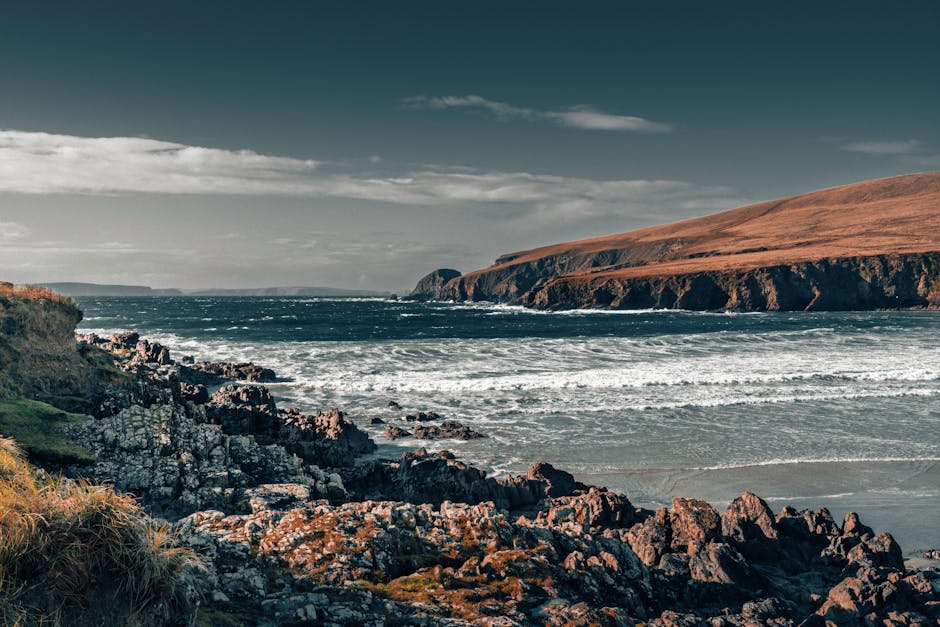
Your rain jacket is the most consequential gear decision for an Ireland trip. The difference between a $60 jacket and a $180 jacket is, in practice, the difference between staying dry and feeling damp within 30 minutes of sustained Atlantic rain. The key spec to look for is full seam taping, not partial — water enters first at wrists, hood edges, and shoulders, exactly where partially-taped jackets leave gaps.
| Jacket | Waterproof Rating | Weight | Seam Sealed | Approx. Price | Best For |
|---|---|---|---|---|---|
| Decathlon Forclaz MT500 | 15,000mm HH | 450g | Critical seams only | ~$60 | Budget; short eastern-Ireland trips |
| Marmot PreCip Eco | 20,000mm HH | 340g | Fully taped | ~$120 | Most travelers — best value |
| Patagonia Torrentshell 3L | H2No Performance Standard | 340g | Fully taped | ~$179 | Frequent travelers; multi-week trips |
| Arc’teryx Beta AR | Gore-Tex Pro | 485g | Fully taped | ~$700 | Multi-day hiking; decade-long use |
For most Ireland trips, the Marmot PreCip Eco is the clear recommendation. It’s fully seam-taped, packs to roughly fist-size, and handles sustained Atlantic rain without wetting out for well over an hour of continuous exposure. The Decathlon option works for a weekend in Dublin but tends to lose its DWR coating quickly under heavy use — it’s a reasonable gamble for the east, not the west coast.
The Arc’teryx requires a specific justification: you’re walking the Wicklow Way over five-plus days in October, or you’ve been burned by cheaper jackets before and want something you’ll use for ten years. For two weeks of coastal driving and short walks, it’s difficult to defend the price gap against the Patagonia or Marmot options.
Footwear: The Verdict Before the Explanation
Buy waterproof trail shoes rather than traditional hiking boots for Ireland. That’s the recommendation for roughly 85% of itineraries, and it holds up.
Most Ireland travel mixes short coastal walks, cobbled town streets, and occasional hillside paths. Traditional hiking boots are overkill for the towns and poorly suited for wet grass slopes unless they’re thoroughly broken in before the trip. Waterproof trail shoes — specifically Gore-Tex lined models — handle all three environments better and don’t require a separate pair of city shoes.
The Salomon X Ultra 4 GTX (~$180) comes up most consistently in this category. It’s light enough for all-day walking through Killarney or Galway’s Latin Quarter, stable enough for the Cliffs of Moher path, and the GORE-TEX liner has a well-documented track record in exactly these conditions. The Merrell Moab 3 GTX (~$150) runs slightly wider in the toe box — worth considering after a full day of walking in August heat. If you have wide feet specifically, KEEN’s Targhee III WP (~$165) typically fits better than either Salomon or Merrell.
For travelers mixing Galway pub evenings with morning hill walks and not wanting to switch shoes, the Scarpa Mojito Trail GTX (~$200) looks like a casual shoe but performs in wet conditions. It’s the only option on this list that passes as non-hiking footwear in a decent restaurant.
The Sock Problem Nobody Mentions
Waterproof shoes fail when water enters from the top — typically when crossing streams or walking through knee-high wet grass. Wool hiking socks, specifically Darn Tough Vermont Hiker Micro Crew (~$25 per pair), extend the useful range of waterproof footwear by keeping feet warmer when water does get in, and they don’t compress to uselessness after repeated washes the way most synthetic socks do.
Power Adapters, SIMs and the Connectivity Basics
Ireland uses the UK Type G plug — three rectangular pins. This catches travelers from continental Europe, North America, Australia, and most of Asia. Without the correct adapter, you cannot charge anything. Rural Ireland makes finding replacements genuinely difficult; the nearest option in parts of Connemara might be a Spar 45 minutes away.
- Power adapter: Any dedicated Type G adapter works. The Anker USB-C Travel Adapter with a UK head (~$15–20) handles modern devices cleanly. Avoid multi-country universal adapters with loose pin fits — they can arc at the connection. A single-purpose UK adapter is more reliable and cheaper.
- Portable battery: Rural Ireland — the Ring of Kerry, Connemara, the Aran Islands — has limited charging opportunities between stops. The Anker PowerCore 20,000 (~$50) provides four to five full phone charges and supports fast charging for current devices. The Anker 737 (24,000mAh, ~$70) is larger but adds a built-in charging display and handles laptops via USB-C PD.
- SIM connectivity: Three Ireland and Vodafone Ireland generally perform best outside Dublin and Cork. EU-issued SIMs work in the Republic at domestic rates under EU roaming rules — but not in Northern Ireland, which remains UK-tariffed. This distinction surprises a meaningful number of visitors who assume Ireland is geographically uniform on this point.
- Offline maps: Download Ireland before you fly on Maps.me or Google Maps. Rural road signage in the Republic is bilingual Irish/English and can be ambiguous on smaller lanes. GPS without data removes a large amount of navigation stress from rural driving days.
Bags and Packs: What Size Fits the Ireland Travel Pattern
Ireland doesn’t demand a specific bag, but the most common itinerary — fly into Dublin, drive a loop, possibly catch a ferry to an island — has practical implications for what you carry.
If flying carry-on only, the Osprey Farpoint 40 (40L, ~$160) fits most airline overhead bins, includes a separate laptop sleeve, and comes with a detachable 13L daypack — useful for cliff walks without dragging full luggage. It’s genuinely sufficient for two weeks in Ireland without checked baggage, provided you’re not overpacking the layering system described earlier.
For shorter trips or travelers who prefer frameless packs, the Cotopaxi Allpa 28 (~$130) is better organized for daily-use access. The main limitation: 28L fills quickly when you’re packing a rain jacket, fleece, waterproof shoes, and a change of clothes for multiple days.
One practical consideration: many Irish B&Bs and guesthouses, particularly older Georgian townhouses converted to accommodation, have narrow stairwells and small rooms. Hard-shell rolling luggage becomes a physical obstacle in a way it doesn’t in modern hotels. A soft-sided pack or rolling duffel is meaningfully easier to manage in traditional Irish accommodation — this is a detail that rarely appears in standard packing guides but comes up repeatedly from repeat visitors.
What Most Visitors Wish They’d Packed

Is a buff or neck gaiter worth it?
Yes — more than a scarf. A merino wool Buff (~$30) is compact, stays in place in wind, and handles the neck-and-ear cold that open jacket collars leave exposed on coastal walks. Scarves pack bulkier, don’t cinch tight enough against wind, and tend to get saturated faster. The Buff also doubles as a light hat liner if your beanie isn’t quite enough on a cold evening ferry crossing.
Do waterproof trousers belong in the bag?
For the Wicklow Way, Slieve League, or any multi-day exposed trail route: yes. For a driving-and-short-walks itinerary: probably not. The Craghoppers Kiwi Pro Lined Trouser (~$90) handles most hiking trail conditions in Ireland without the bulk of a full hardshell trouser. If you’re going further into serious hiking, the Fjallraven Keb Trousers (~$250) are the upgrade worth considering — they’re wind-resistant enough for cliff-top exposure and articulated for movement.
What about gloves and a hat?
Wool or fleece, not cotton. A wet cotton hat loses insulation immediately and doesn’t recover. The Smartwool Cuffed Beanie (~$35) or any mid-weight merino option handles Irish conditions well across spring, autumn, and winter visits. For summer, a light wool liner hat is enough on cool evenings. Gloves are worth packing for anything outside June and July — even a thin merino liner glove makes a significant difference on a 10°C exposed headland walk.
What to Buy When You Land Instead of Packing It
Sunscreen, basic toiletries, and ponchos are all available at Dunnes Stores, Tesco, or Penneys (the Irish Primark) at normal retail prices. Child car seats are available from most Irish rental agencies on request — you don’t need to fly with your own. Umbrellas are cheap and sold everywhere, though as established above, their usefulness on the west coast is genuinely limited.
The exception worth noting: your primary rain jacket and waterproof shoes. Both are available in Ireland but typically priced 15–25% above US or continental European retail. Buy them before you fly, not at a Dublin outdoor shop where the same Marmot jacket costs meaningfully more.
Pack the right waterproof jacket — fully seam-taped, tested before the trip — and Ireland’s weather becomes part of the experience rather than an obstacle to it.